
Impact Stories
Research Impact Story:
Thomas Cavalieri, DO
Translating research in aging, osteopathic medicine and chronic disease into improved primary care for older adults.
In June 2026, Dr. Cavalieri retired from Rowan-Virtua School of Osteopathic Medicine as Vice President and Senior Advisor for Healthcare and Medical Education, at which time the Osteopathic Heritage Foundation Endowed Chair for Primary Care Research in Aging passed to Dr. Richard Jermyn, Dean of Rowan-Virtua SOM. We are honored to share the legacy of Dr. Cavalieri’s work from the Impact Story below.
The Osteopathic Heritage Foundation Endowment for Primary Care Research in Aging at Rowan-Virtua School of Osteopathic Medicine (RVSOM) was established in 2004 to increase primary care research in aging and osteopathic principles and practices. Utilizing a mentorship model, the endowment supports research conducted by osteopathic medical students, residents, fellows and faculty.
Thomas A. Cavalieri, DO, is Vice President, Senior Advisor for Healthcare and Medical Education at Rowan University. He was the inaugural Vice President for the Virtua Health College of Medicine and Life Sciences of Rowan University and Chief Academic Officer for Virtua Health. He has served as the Osteopathic Heritage Foundation Endowed Chair for Primary Care Research in Aging since its inception. A practicing geriatrician, Dr. Cavalieri specializes in the care and treatment of older adults. He founded the Center for Aging in 1986, which has grown into the Rowan-Virtua New Jersey Institute for Successful Aging (NJISA) with a three-fold mission of clinical service, education and research in geriatrics. He is a nationally recognized leader in the osteopathic medical profession and has received numerous awards for his advocacy for osteopathic medical education and patient care. Dr. Cavalieri served as the Dean of the School of Osteopathic Medicine from 2006 – 2023 and under his leadership, the School more than doubled enrollment and expanded to a second campus.
Dr. Cavalieri graduated from Des Moines University College of Osteopathic Medicine. He completed residency at Thomas Jefferson University Hospital and later pursued advanced training in geriatrics at the Philadelphia Geriatric Center.
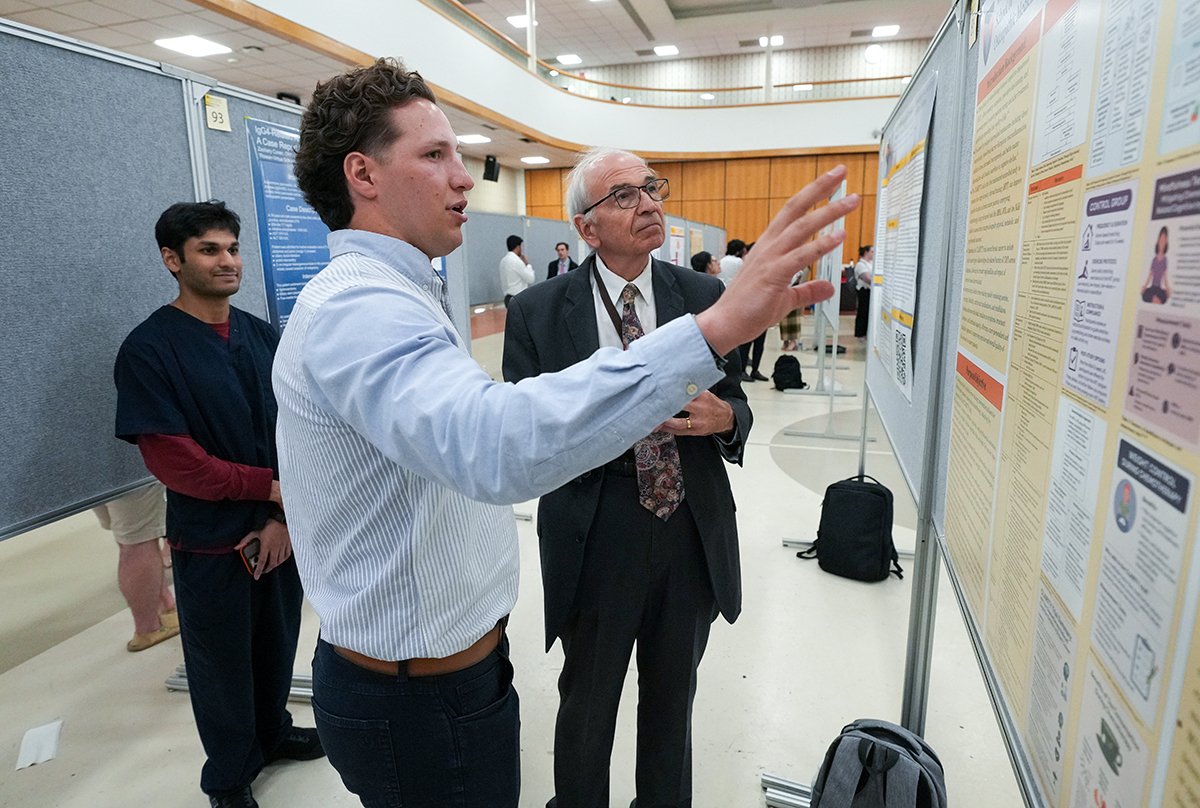

Investing in the Future of Patient Care

Dr. Cavalieri has fostered a culture of research at RVSOM rooted in osteopathic medicine and its holistic approach to patient care. The resulting improvements in primary care practice for older adults is helping people live longer, healthier lives.
Terri Donlin Huesman, President/CEO
Scientific Discovery:
Translating research in aging, osteopathic medicine and chronic disease into improved primary care for older adults.
The Future of Patient Care:
Increasing access to evidence-based treatments to improve both the quality and length of life for aging patients.
Dr. Cavalieri spoke with Osteopathic Heritage Foundation about the impact of the Foundation’s investments.
How does the endowment foster a clinical research culture at RVSOM?
The endowment fosters a culture of research in two ways, providing funding opportunities for our faculty and for students. Each year, the endowment awards pilot grants to RVSOM’s faculty in the areas of primary care, aging, osteopathic manipulative medicine and chronic disease. These grants help further faculty research that can lead to developments in the field and improvements in patient care. The pilot grants also help faculty generate preliminary data that can be used to pursue extramural funding opportunities. One such project, the development of innovative diagnostic tests to enable early detection of diseases such as Alzheimer’s, is an example of how research supported by the endowment is leading to improved patient care. The endowment supports a full-time Research Assistant to provide support for RVSOM’s clinical research faculty and aids in the initiation and implementation of endowment-funded research studies and submitting applications for extramural funding.
The endowment also provides funding for RVSOM’s summer research program for osteopathic medical students. Historically, osteopathic medical education has focused on preparing students as clinicians with most students receiving minimal training on research methodologies. RVSOM’s summer research program exposes students to all aspects of scientific research and the administrative and managerial responsibilities of conducting research. This experience prepares them for their future roles as physicians and equips them to potentially become principal investigators themselves.
Why is research focused on healthcare and quality of life issues facing older adults important?
Maintaining functional activity, the ability to perform the physical and cognitive tasks of daily life, is linked to living longer and independently, so understanding and finding effective treatments for conditions impairing functional activity is important.
For example, geriatrician Donald Noll, DO received endowment funding to study leg edema while at NJISA. This common condition in older adults causes swelling in the lower extremities due to poor circulation and limits mobility. Dr. Noll demonstrated the effectiveness of an osteopathic manipulative medicine technique known as the pedal pump, which involves gently moving the foot to facilitate fluid movement and alleviate leg edema. His research is leading to practical improvements in primary care for older adults by demonstrating how the pedal pump technique can improve both quality of life and longevity for aging patients without prescribing drugs or causing discomfort.
How has the Foundation’s support helped you advance patient care?
The endowment supports faculty research at RVSOM through the competitive Intramural Research Program. The program provides funding for early-stage pilot projects, enabling researchers to accrue preliminary data and validate concepts. The Foundation’s support serves as a launching pad for investigators and once enough data has been gathered, they can then seek funding from institutions like the National Institutes of Health to further their research. Findings from studies supported through the Intramural Research Program have been disseminated through scientific conferences and peer-reviewed publications; supported changes in clinical guidelines and protocols; and led to the development of new therapeutics or treatments. The Intramural Research Program has also increased the number of RVSOM faculty members engaging in research, creating more opportunities for students and residents to gain research experience.
Endowment funds provided by the Foundation also support biomedical research studying the molecular and cellular mechanisms underlying various disease processes. These projects have translational implications, which means the research knowledge gained can be applied to diverse clinical and therapeutic research questions to benefit patient care and improve health. Research conducted by Dr. Robert Nagele, a professor of medicine at NJISA, has led to groundbreaking discoveries and are an example of how early support for biomedical research can lead to improved patient care. Initially, Dr. Nagele identified a new self-reactive type of antibody (a protective protein produced by the immune system that attaches to foreign matter, such as a virus). Further investigation revealed this antibody serves as an indicator of Alzheimer’s. Building upon this discovery, Dr. Nagele developed a diagnostic test for Alzheimer’s.
Dr. Nagele’s foundational breakthrough paved the way for similar discoveries related to other brain-based diseases, including Parkinson’s, a condition characterized by involuntary movements, and amyotrophic lateral sclerosis (ALS), a progressive neurodegenerative disorder affecting nerve cells in the brain and spinal cord. Because these diseases are believed to begin affecting the body as much as a decade before symptoms become apparent, Dr. Nagele’s discoveries have direct implications for primary care. If primary care physicians can administer a simple blood test to detect biomarkers associated with these diseases, lifestyle interventions and therapeutics can be started earlier. While there is no known cure for these diseases, early interventions, such as maintaining good blood pressure, cholesterol control and engaging in mental and physical activities, can positively impact disease progression and quality of life for aging patients.
How does the osteopathic profession’s focus on treating the whole person influence research conducted at RVSOM?
Osteopathic medicine places emphasis on comprehensive care and encompasses health promotion and disease prevention, both of which contribute to healthier aging and quality of life. Research experience helps cultivate a new generation of osteopathic physicians who approach patient care and research through this lens, emphasizing the body’s innate capacity for self-healing. By nurturing this pipeline of osteopathic physician researchers, the integration of osteopathic principles into research practices is strengthened, aligning with the profession’s core tenets and further advancing the field.
What is next for research at RVSOM?
There is a need for more studies demonstrating the impact of osteopathic medical education and interventions on patient care. RVSOM strives to provide evidence-based support for the unique value of osteopathic medicine in primary care for older adults. This extends beyond osteopathic manipulative interventions and encompasses the osteopathic profession’s comprehensive approach to patient care and the integration of mind, body and spirit.
Colleges of osteopathic medicine have a responsibility to undertake more of this type of research, including qualitative aspects such as patient satisfaction and the unique humanistic approach to patient care found in osteopathic medical education. RVSOM Dean, Richard Jermyn, DO, has assembled the Osteopathic Research Collaborative, a task force of experts in osteopathic clinical medicine and research from various departments, to add to the growing body of scientific evidence demonstrating the impact of osteopathic medicine and its comprehensive approach to patient care.

Thomas Cavalieri, DO
Dean Emeritus, Rowan-Virtua School of Osteopathic Medicine
Inaugural Osteopathic Heritage Foundation Endowed Chair for Primary Care Research in Aging
Photos courtesy of Rowan-Virtua School of Osteopathic Medicine and Kevin Monko